



Thatch Projects
The Society for the Protection of Ancient Buildings Scotland (SPAB) Survey
The SPAB publication A Survey of Thatched Buildings in Scotland was published in 2017 and provides useful baseline information for all known thatched buildings in Scotland.
Regional Designation Resurvey
Historic Environment Scotland (HES) is reviewing thatched building listings across Scotland. The resurvey aims to create an updated record of thatched buildings to ensure they are properly represented, valued and protected. The majority of resurveys have now been undertaken. This was initiated in 2018 following a survey of thatched buildings in Scotland by SPAB. The Scotland's Thatched Buildings Introductory Designations Report provides further background information. Find out more about listed buildings and search the portal for updated designations.
Royal Society for the Protection of Birds (RSPB) Tay Reed Production
There is only one commercial source of thatching reed in Scotland, produced on the Tay Estuary by the RSPB. Our thatching reed blog discusses Tay Reed and the biodiversity benefits of harvesting. Contact the RSPB if you are interested in purchasing Tay Reed. HES is working with the RSPB to find a sustainable way to harvest reed and produce thatching material commercially, as it is more expensive than managing reed for biodiversity alone.
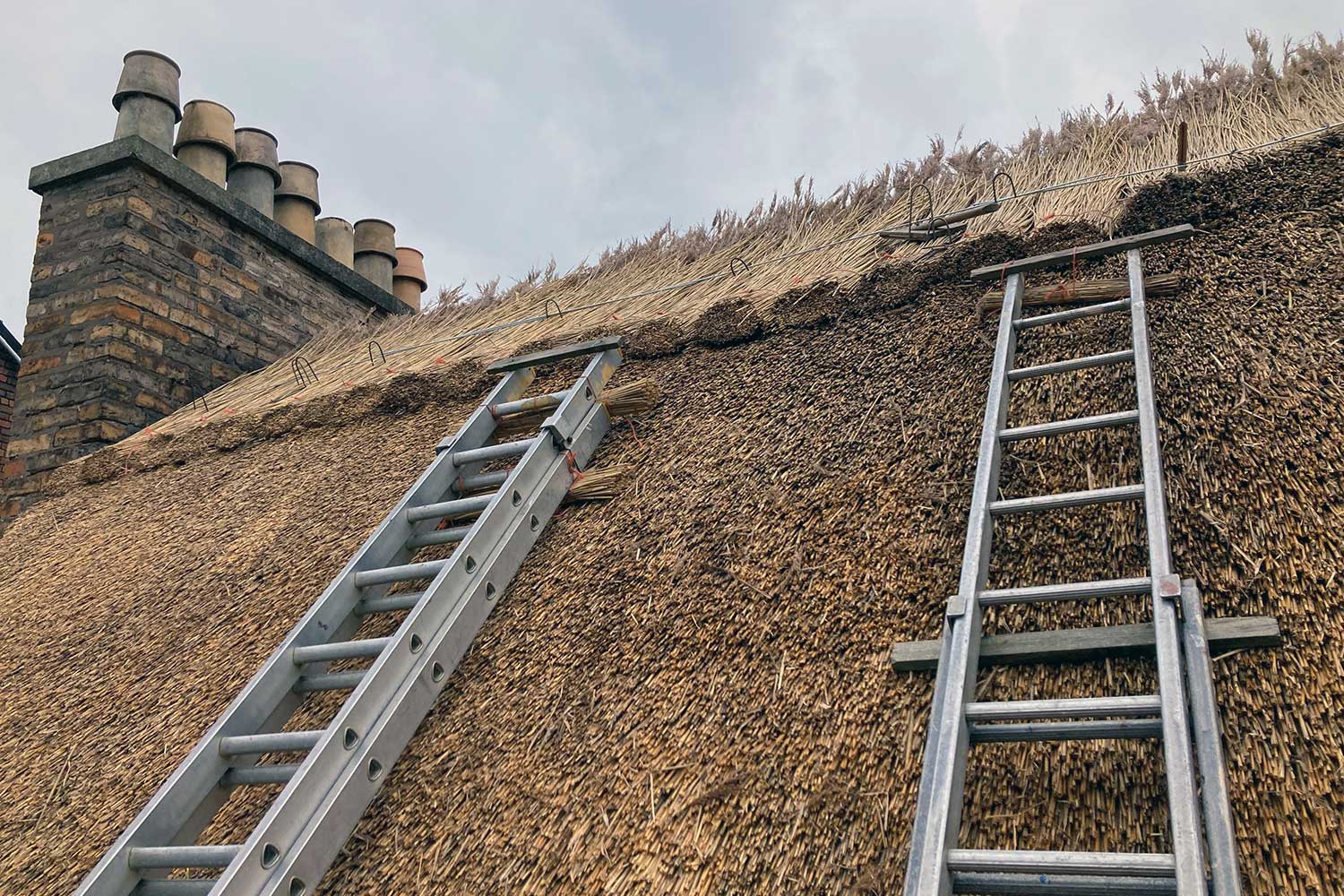
Reed from the Tay Reedbeds being applied to a roof in Ayr.
Straw Machinery
HES has supported thatching materials guidance commissioned by Historic England on measures to improve the economic sustainability of harvesting straw for thatching. The research has been undertaken by Dr Andy Scarlett and looks specifically at:
- the mechanical and operational challenges of harvesting machinery
- how the harvesting process might be refined
Technical Guides for straw growers have also been developed to help maintain harvesting machinery.
Heather Picking
Heather picking is an essential skill needed for thatching with this material. Troy Holt, our former Thatching and Drystone Dyking Craft Fellow, delivered a film and a blog about how to pick heather for roof thatching.
Western Isles Thatch Audit
HES published the Western Isles Thatch Audit in January 2026. Carried out by SAC Consulting, this provides baseline information on thatching materials available in the Western Isles. Recommendations are put forward across the range of thatching materials audited, and the report outlines:
- where materials have historically been harvested
- where they are available and harvested now
- potential areas of opportunity
- challenges and environmental impacts
Sustainability of Marram Harvesting
The Western Isles Thatch Audit identified a need to better understand the sustainability impacts of marram harvesting, as there is little scientific data currently available. Since 2023, surveys have been conducted to understand where harvestable marram grows. In September 2025, fieldwork began on Berneray to measure the yield and regrowth rate of harvested marram. Fieldwork will continue annually over the next few years, with results expected from 2029. The project is being undertaken jointly by HES with NatureScot.
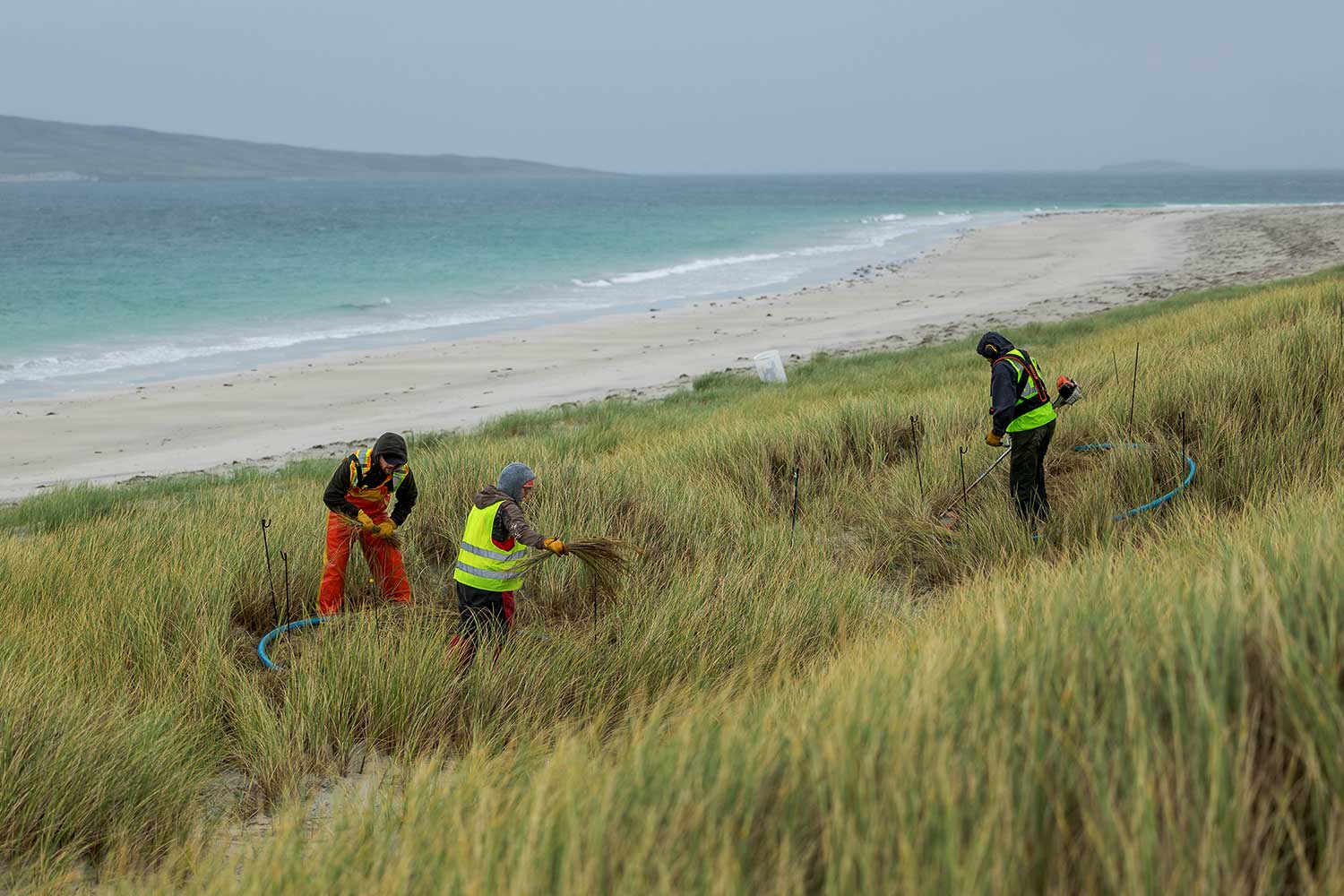
Marram harvesting on Berneray © Sandie Photography
Thatch Guidance
HES has produced a number of technical guidance documents on thatch. You can find these in our building advice pages about thatched roofs.