



Stone and Slate Projects
Building Stones Databases for Scotland
The Building Stones Database for Scotland aims to define and describe all the building stones of Scotland. It also provides details of associated quarries, built sites and reference samples. The database was built and is managed by the British Geological Survey (BGS) and is jointly funded by Historic Environment Scotland (HES).
Development Potential for Building Stone Resources in Scotland
The report Development Potential for Building Stone Resources in Scotland includes:
- shortlists for building stones and quarries in Scotland that can be considered most historically significant
- reviews of UK market conditions for stone materials
- suggestions for resources which may have the greatest potential for renewed production of building stone
This research was undertaken by the BGS and funded by HES. The research is published in the Proceedings of the 15th International Congress on the Deterioration and Conservation of Stone (2025) [PDF, 28.3MB] and informed a blog considering a comeback for Scottish stone production.
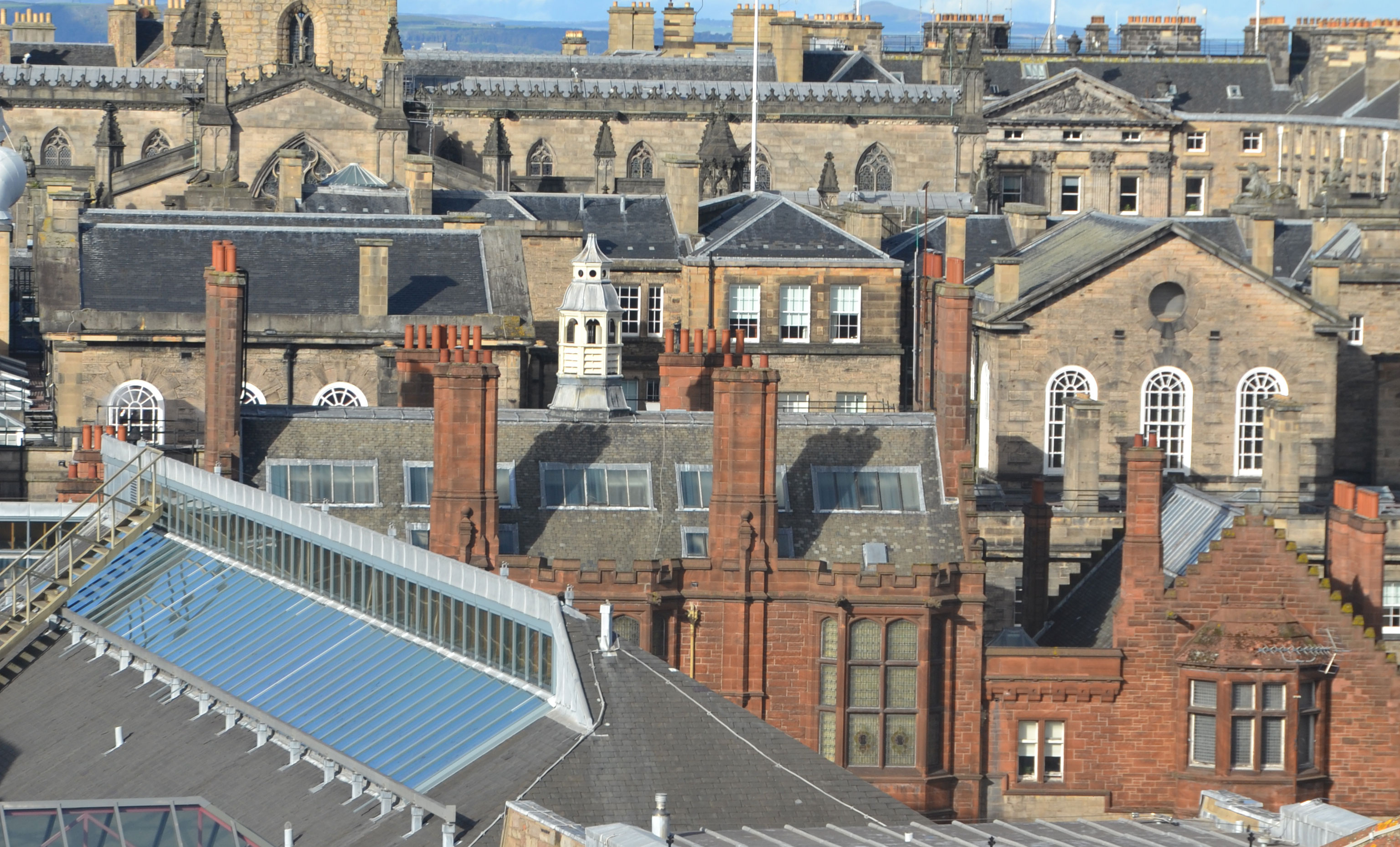
View over Edinburgh rooftops.
A review of sandstone paving in the Edinburgh New Town
HES, City of Edinburgh Council and Edinburgh World Heritage funded a report: A review of sandstone paving in the Edinburgh New Town World Heritage site, which was undertaken by the BGS. The review summarises the source of paving stone currently used in the world heritage site, identifies available sources for future stone sourcing, and provides advice on specifications for stone.
Re-opening an Historic Slate Quarry on Luing
Luing is one of the historic slate islands. HES is working with Highlands and Islands Enterprise to support the Isle of Luing Community Trust to re-open a slate quarry at Cullipool, Luing. It will provide the first source of new Scottish slate since the 1960s and will be important in supporting the viability of the island’s economy and community. A contractor has been appointed and it is hoped the first slates will be produced in September 2026. This film captures responses to the community consultation in September 2021.
Hawick Flood Protection Scheme
BGS was commissioned by HES, with the agreement of Scottish Borders Council, to perform a building stone assessment. The aim was to independently characterise and establish the origins of the buff sandstone used in the construction of the flood defence walls, and to provide technical comment on the properties of the stone(s) employed relative to those set out in the specification.
Angus Flagstone Audit
Flagstone roofs are rare in Scotland and usually found in areas with a local source of this type of stone. HES commissioned consultant Sara Carruthers to gather information on what is known about Angus flagstone and to understand how many roofs are still covered by this material. The audit found around 230 buildings surviving, many of which were unused and/or in poor condition. Whilst a new source of flagstone is now available, the Angus Flagstone Roofing report identified 10 action points to support retaining these roofs. This Angus Flagstone blog shares a summary of the project.
Stone Carbon Calculator
Natural stone can be one of the most sustainable and lowest-carbon construction materials if it is procured near to where it is to be used. The Stone Carbon Calculator was funded by Zero Waste Scotland and developed in partnership with HES to provide a simple way to calculate the embodied carbon footprint of natural sandstone and granite. Basic project information can be entered to determine the embodied carbon from different quarries around the world. Contact technicalresearch@hes.scot for more information on the calculator.
Embodied Carbon of Slate
Led by Historic England, we have supported a literature review on the embodied carbon of slate. The research makes a strong sustainability case for specifying indigenous slate over imported slate because of the transport emissions. However, more data is required relating to indigenous slate production.
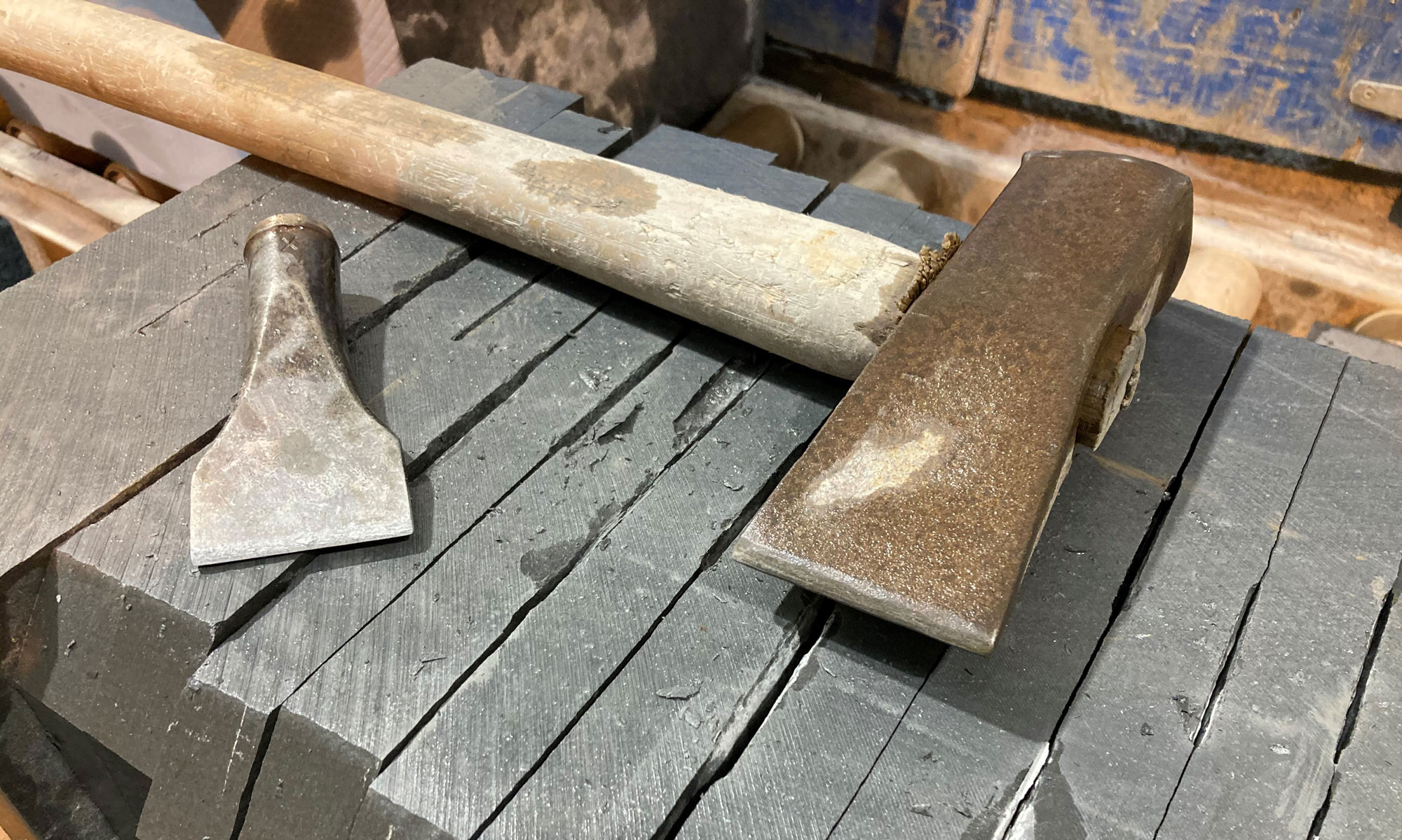
Tools used for traditional slate manufacture
Scotland Excel Procurement Framework
A pilot framework of natural stone product suppliers for the public sector has been established in partnership with Scotland Excel, for use by their members. This is the first time that natural stone products have been made available through a public sector procurement framework. Participating suppliers have been through an application and evaluation process for inclusion on the framework to provide enhanced reassurance to buyers in terms of ethics and sustainability.
Scotland's Building Stone Industry: A Review (2016)
Scotland has one of the richest legacies of traditional (pre-1919) buildings and other stone structures of any country in the world. However, the building stone industry that created that legacy is now a small fraction of its former size and struggling to survive. This 2016 report is a review of the building stone industry in Scotland and includes:
- a summary of its history, current state, threats and opportunities
- a list of practical steps that can be taken by the industry and other stakeholders to encourage and facilitate growth

Looking up at Edinburgh Castle.
Stone Futures Webinars
We delivered a series of webinars in collaboration with the Scottish Ecological Design Association (SEDA) and the Chartered Institute of Architectural Technologists (CIAT). The five webinars are linked below:
- Stone Futures 1 – The Development Potential of Stone
- Stone Futures 2 – Specifying Stone and Stone Bricks
- Stone Futures 3 – Embodied carbon of slate
- Stone Futures 4 – Stone stories
- Stone Futures 5 – Stonut and Brochs
Stone and Slate Guidance
HES has produced a number of technical guidance documents on stone and slate. You can find these in our building advice pages about sandstone and building advice pages about slate.